10 science-backed benefits of babywearing
When a baby arrives, advice pours in from everywhere. Some say, "Carry them, they need closeness," while others warn against the myth of "spoiling them." If your head is spinning, let's put opinions aside and look at the facts.
Carrying a baby in an ergonomic carrier (or wrap) is a tradition as old as time. Today, however, we don't have to rely solely on our great-grandmothers' intuition - science has a very clear stance on this. Research shows that closeness has a powerful, measurable impact on baby's development and parental well-being.
Regular babywearing reduces crying time, lowers parents' cortisol levels, supports lactation and sleep, while the correct "M-position" in an ergonomic carrier promotes healthy hip joint development. The key requirement: a well-fitted, ergonomic carrier.
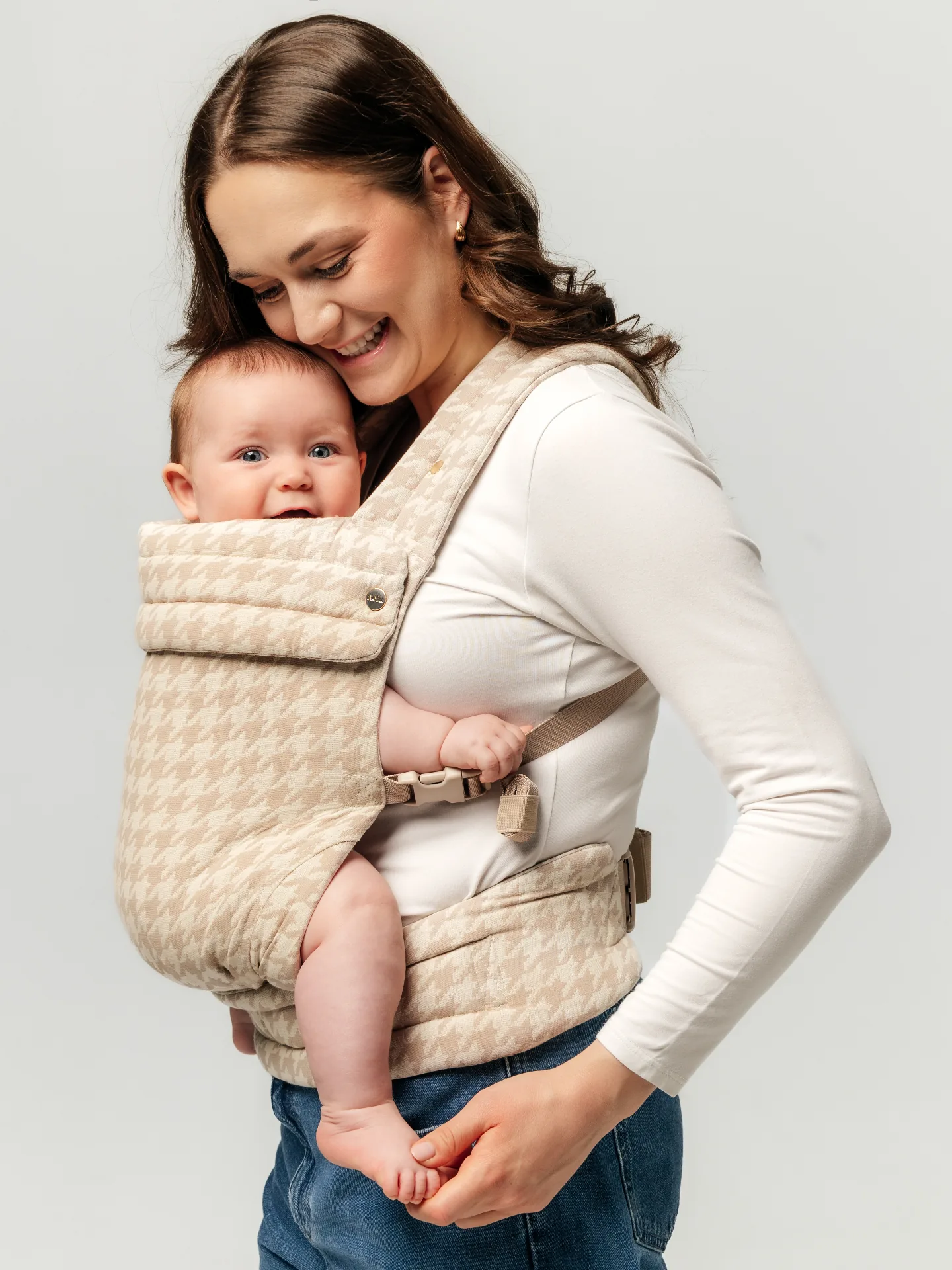
1. Building a secure bond
Physical closeness is the foundation of healthy emotional development. When you carry your baby, you give them a sense of complete security. Research shows that children whose need for closeness was fully met in infancy find it easier to build healthy, trusting relationships in adulthood.
2. An oxytocin boost - for both of you
Carrying your baby stimulates the release of oxytocin - the so-called "love hormone." Interestingly, this hormonal surge occurs in both baby and parent. Oxytocin lowers stress levels, strengthens nurturing instincts, and simply makes us feel happier.
3. Reading your baby's cues faster
When your baby is right under your nose, you notice even the subtlest changes in their behavior. Before they start crying loudly, you already know they're squirming because they're getting hungry or tired. Science confirms: parents who carry their little ones are more responsive and react faster to their baby's needs.
4. Easier and longer lactation
Close skin-to-body contact stimulates breast milk production. What is more, babywearing makes comfortable, discreet breastfeeding possible almost anywhere. Nursing more frequently - which comes naturally when your baby is so close - is the best way to establish and maintain a steady milk supply.

5. Better, more peaceful sleep
Have a little one who protests the moment they are put down in the crib? The gentle motion of your body, the sound of your heartbeat, and your familiar scent work like magic. Studies show that babies who spend time in carriers fall asleep faster and sleep more soundly. And a well-rested baby means... a better-rested parent.
6. Less crying and colic
This is one of the most immediate benefits. Scientific studies show that regular babywearing significantly reduces crying time - especially in the evening hours when babies are most likely to feel overstimulated. The upright position and the gentle tummy massage that happens naturally as you walk also provide relief from gas and colic.
Carrying babies more reduced overall crying time by nearly half - Hunziker & Barr, Pediatrics 1986.
7. Mental health support for parents
The fourth trimester can be challenging, and postpartum depression or anxiety affects many new mothers. Carrying your baby genuinely lowers cortisol (the stress hormone) levels, quieting intrusive thoughts and restoring a sense of confidence and control. Importantly, studies show that when fathers wear their babies, it strengthens their parenting role, lowers anxiety, and builds a unique, lasting bond.
Nelu Close features an adjustable waistband from 72 to 138 cm (size XXS-4XL), so one carrier truly fits both parents effortlessly.
8. Healthy hip development
An ergonomic carrier supports the natural "frog-leg" position (M-position), where baby's knees are higher than their bottom and legs are spread wide - encouraging healthy hip joint development. Research shows that in cultures where babies are carried this way, hip dysplasia rates are remarkably low.
9. Preventing flat head syndrome (plagiocephaly)
With current safe sleep guidelines recommending back sleeping, babies spend a lot of time on their backs - in cribs, bouncers, and strollers. This can lead to flat spots on the back of the head. Babywearing relieves pressure on soft skull bones naturally, without the need for corrective helmets.
10. An easier return to daily life and work
Finally, the everyday practicality. Babywearing lets you weave daily life and parenting together - especially if you work from home. Free hands mean you can reply to an email, make lunch, or spend time with an older sibling, while your little one naps peacefully, snuggled right against you.
Summary
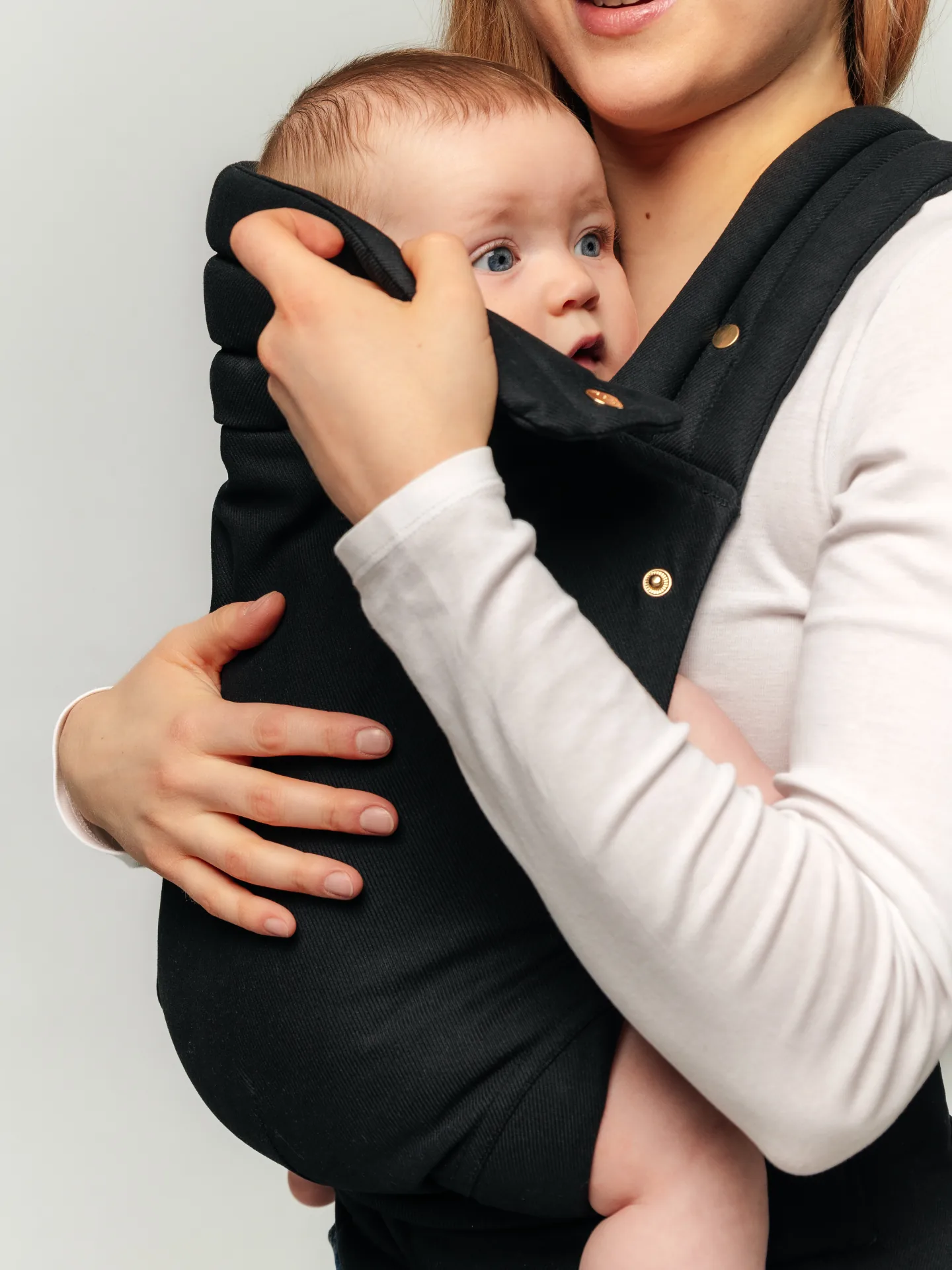
Babywearing is not just a beautiful way to bond; it is a scientifically proven tool that supports the physical and emotional well-being of the entire family. Of course, babywearing is not for every parent, and that is completely fine. But if you are wondering whether to give it a try - science gives you the green light.
Want to learn how to wear safely? Read our post Why you should NEVER carry a baby facing outwards and answers to frequently asked questions.
Nelu Close - from 3.6 to 16 kg, "M" position, two carrying positions (front and back), certificate of compliance with standard EN 13209-2.
Scientific references
- Hunziker, U. A., & Barr, R. G. (1986). Increased carrying reduces infant crying: a randomized controlled trial. Pediatrics, 77(5), 641-648.
- Anisfeld, E., Casper, V., Nozyce, M., & Cunningham, N. (1990). Does infant carrying promote attachment? Child Development, 61(5), 1617-1627.
- Feldman, R., Weller, A., Zagoory-Sharon, O., & Levine, A. (2007). Evidence for a neuroendocrinological foundation of human affiliation. Psychological Science, 18(11), 965-970.
- Bigelow, A. E. et al. (2012). Effect of mother-infant skin-to-skin contact on postpartum depressive symptoms and maternal cortisol. JOGNN, 41(3), 369-382.
- Scism, A. R., & Mitchell, A. M. (2020). The effect of babywearing on paternal attachment and anxiety. Applied Nursing Research, 56, 151353.
- International Hip Dysplasia Institute (IHDI) - guidelines for safe hip positioning in baby carriers and wraps.
- American Academy of Pediatrics (AAP) - recommendations for the prevention of infant skull deformities.