Why you should NOT carry your baby facing outward
When your little one starts curiously looking around, many parents wonder whether to turn them outward in the carrier. From an adult's perspective, it seems like a great way to show the baby the world around them.
However, physiotherapists, orthopaedists, and babywearing consultants are unanimous on this: carrying a baby facing outward (with their back to the parent's chest) carries serious consequences for the little one's physical health and emotional development.
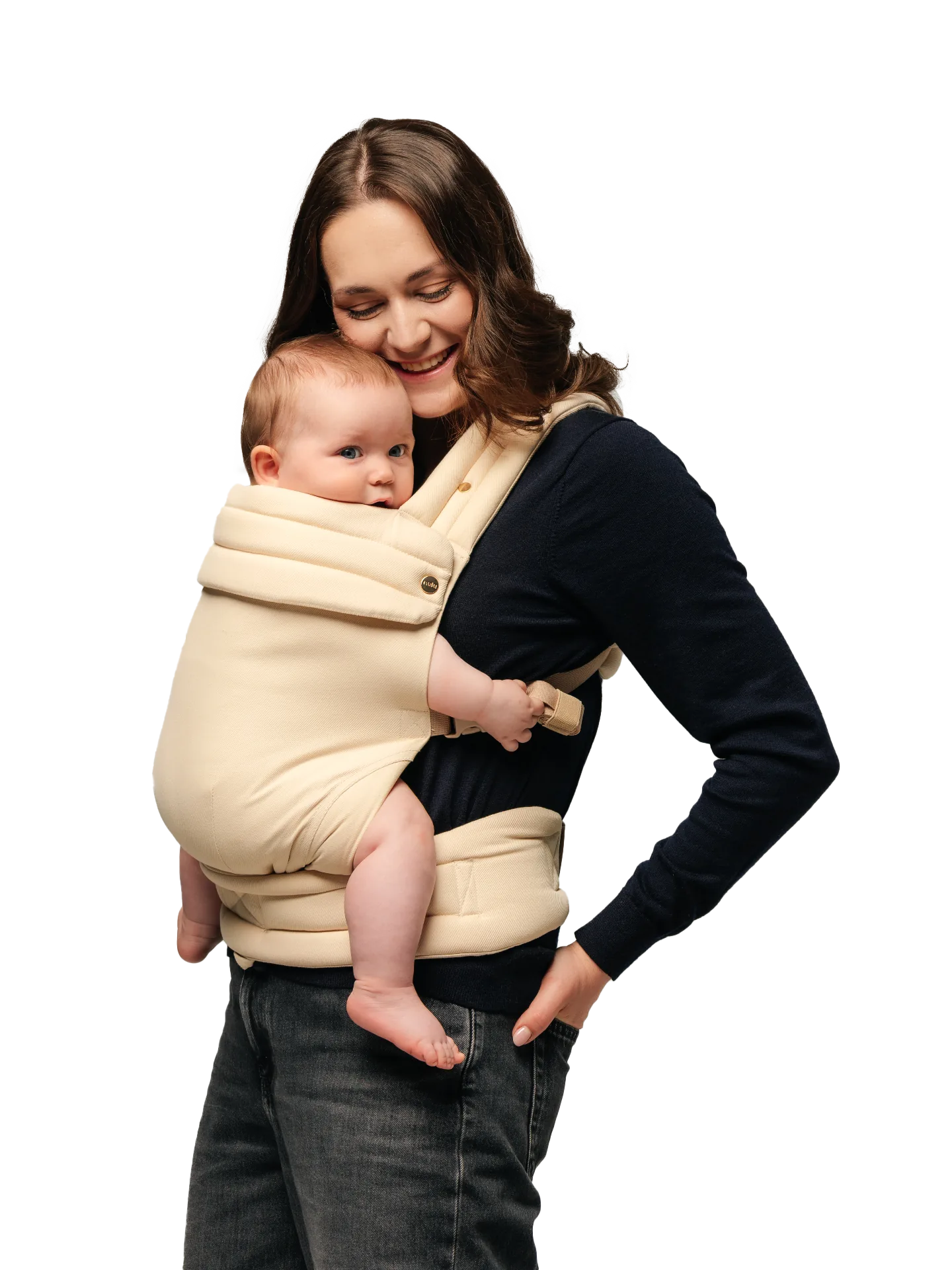
The ergonomic baby carrier Nelu Close was designed exclusively for carrying your baby tummy-to-tummy (front carry) or on the parent's back. Under no circumstances should a baby be carried facing outward.
Incorrect posture and joint strain
An infant's natural anatomy requires maintaining a gentle rounding of the spine (the "C-curve") and a wide leg spread in a physiological supported position - the "M-position" or "frog-leg position", where the knees are higher than the bottom and the thighs are fully supported.
In the outward-facing position, the baby's spine rests against the parent's rigid chest, forcing an unnatural hyperextension in the lumbar spine. The child's entire body weight hangs solely from their crotch. Instead of safe support along the thighs and bottom, the hip joints suffer harmful strain, negatively affecting their development and increasing the risk of dysplasia.
Overstimulation of the nervous system
Infants cannot yet independently filter incoming environmental stimuli - fast movement, bright light, noise, or unfamiliar faces. In the tummy-to-tummy position, the baby always has a safe haven: at any moment, they can turn their head away, bury their face in the parent's chest, and shut out overwhelming sensations.
The outward-facing position deprives the baby of this option. They are directly exposed to a barrage of stimuli with no way to retreat. This leads to overstimulation, anxiety, crying, and severe difficulty falling asleep.
Lack of head and neck support
When the child sits with their back to the wearer, the carrier panel is behind them and provides zero head support. If the baby falls asleep or the parent makes a sudden movement, the child's head drops forward or to the side unassisted. This poses a serious danger to the delicate cervical spine and can compromise the baby's airway.
Strain on the parent's spine and hips
This position is also detrimental to the wearer. The child's centre of gravity shifts significantly forward. To counterbalance this weight, the parent unnaturally leans their torso backward, arching the lumbar spine and exaggerating lordosis. This quickly leads to muscle strain, back pain, and compromised walking posture.
Comparison of carrier positions
| Feature | Tummy-to-tummy / back carry (correct) | World-facing (incorrect) |
|---|---|---|
| Spine alignment | Natural "C" shape (physiological kyphosis) | Unnatural lumbar hyperextension |
| Leg and hip positioning | "M" position - knees higher than bottom, thighs supported | Legs dangle freely, weight rests on the crotch |
| Protection from overstimulation | Full control - baby can turn away and hide their face | No way to turn away from stimuli |
| Head and neck support | Stable support against the carrier panel | No support, head falls forward during sleep |
| Parent comfort | Center of gravity close to the body | Shifted center of gravity, lower back pain |
How to safely satisfy curiosity about the world
If your little one can already sit unassisted (usually from around 6-8 months) and wants a wider field of view, the best and completely safe solution is moving your Nelu Close carrier to your back. Your baby gets a great view over your shoulder while maintaining an ergonomic spine and hip position, along with the comfort of snuggling into your back when tired.
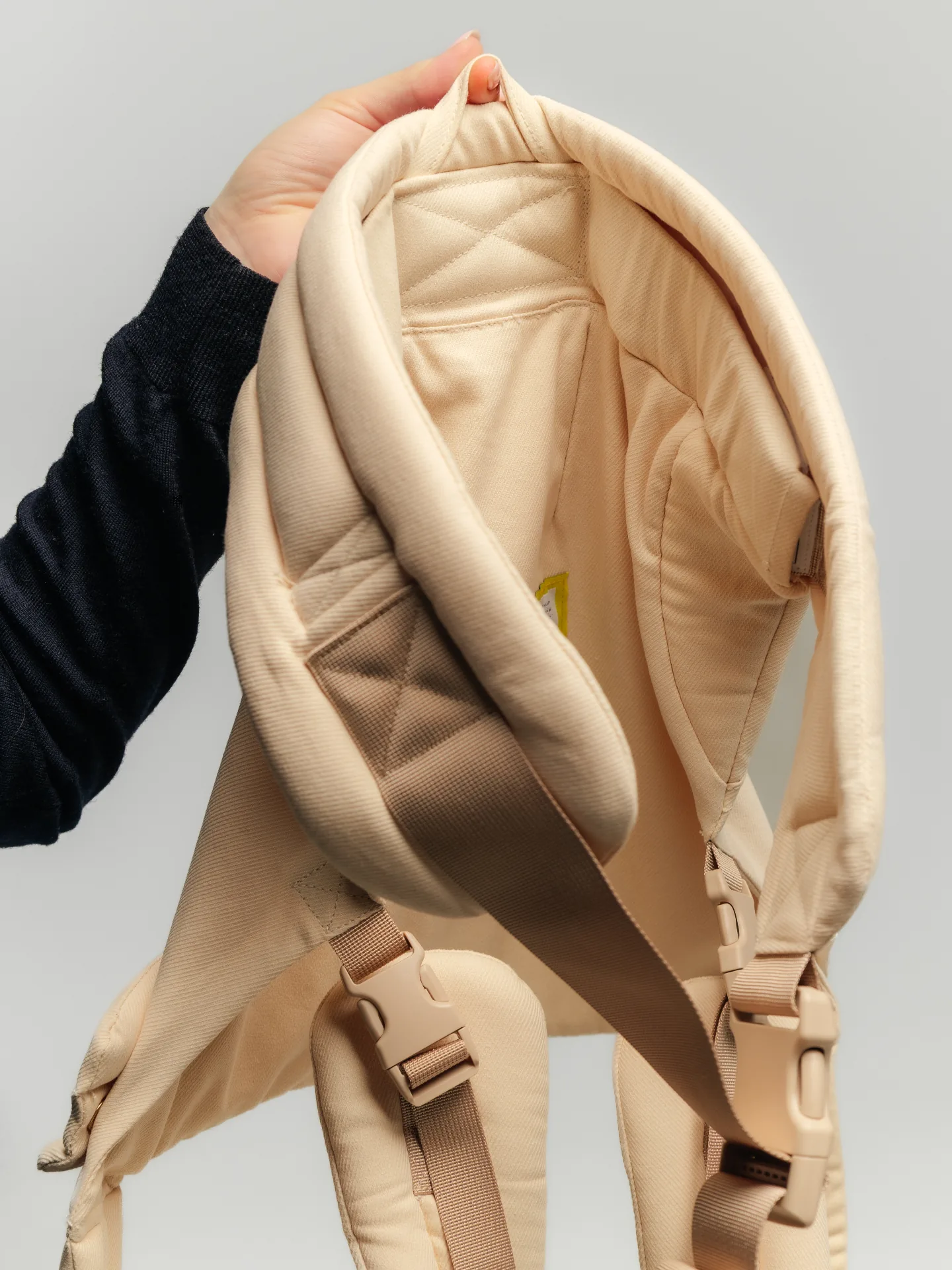
Nelu Close - front and back carry, 3.6 to 16 kg, "M" position, waistband adjustment 72-138 cm.
Want to know why closeness matters so much? Read the article 10 science-backed benefits of babywearing.
Sources and references
- International Hip Dysplasia Institute (IHDI) - Infant Carriers and Hip Development Guidelines: guidelines for proper thigh support and avoiding dangling legs in baby carriers.
- ClauWi® Babywearing School - standards for safe babywearing in ergonomic carriers and wraps.
- American Academy of Pediatrics (AAP) - Infant Carrier Safety and Postural Support: recommendations for neck support and preventing overstimulation.
- EN 15612 standard - European safety standard for soft carriers.