What to look for when choosing a baby carrier?
A wrap, a soft structured carrier, something pouch-like, something with buckles, something with a "my friend recommended it" stamp... Choosing a baby carrier can feel overwhelming, especially the first time around, often while still pregnant and planning ahead.
Yet this isn't just an aesthetic choice like the color of a blanket or the pattern on a onesie. The way a carrier supports your baby directly affects the development of their hip joints and spine, and its design determines whether your baby breathes freely or not. We decided to gather everything you should check before making up your mind in one place - no marketing fluff, just grounded in what the specialists say.
Check the seat (knee-to-knee support), back panel flexibility , fitting in line with the T.I.C.K.S.rule, independent chemical and flammability testing, plus natural, breathable fabrics and an adjustable weight range.
Standing in front of a shelf full of carriers, not knowing where to start
Before you start comparing colors and prices, it helps to know what to actually look for. Below are seven things that truly determine whether a carrier will be safe and comfortable for months to come.
A baby's hips don't forgive halfway solutions
Let's start with something that might sound surprising: up to one in six babies is born with some degree of hip instability. The International Hip Dysplasia Institute also points to something even more concerning - studies from Norway showed that as many as 90 percent of young adults who required hip replacement surgery due to dysplasia were never diagnosed in infancy. In other words, milder forms of dysplasia often go unnoticed for years.
That is why there is so much talk about the "M-position", also known as the frog position - baby's legs spread to the sides, knees level with or slightly higher than their bottom, and thighs supported all the way to the knee crease. Researchers from Boise State University actually verified this using ultrasound, comparing the hips of infants carried in wide-seat carriers versus narrow ones. The difference in how the femoral head sat in the hip socket was clear, and most noticeable in babies who already had mild dysplasia.
What does this mean in practice when you are standing in front of a shop shelf? Check whether the carrier's seat supports the baby's entire thigh, not just their crotch - if the legs hang straight down, it is a sign to look for a different model, at least for the first few months.
A back that doesn't know the letter S yet
An adult's spine forms a double S-shape - the result of years of standing upright, sitting, and walking. A newborn is born with a completely different anatomy - their spine is a single, continuous C-curve. A good carrier allows the baby's back to keep this natural curve instead of forcing a stiff, upright posture that a little one simply is not ready for yet.

It is well worth checking whether the back panel is flexible or adjustable enough to adapt to your baby's developmental stage - and not the other way around.
Five letters worth remembering - T.I.C.K.S.
The biggest real risks associated with babywearing are falls and airway obstruction. A UK consortium of sling manufacturers and retailers developed a simple acronym to help remember the rules - T.I.C.K.S.
- Tight - carrier is snug and tight, baby does not slump down.
- In view - baby's face always visible, without opening up the fabric.
- Close enough to kiss - head close enough to kiss easily.
- Keep chin off chest - chin never pressed against their chest.
- Supported back - back supported in a natural position, tummy against the parent.
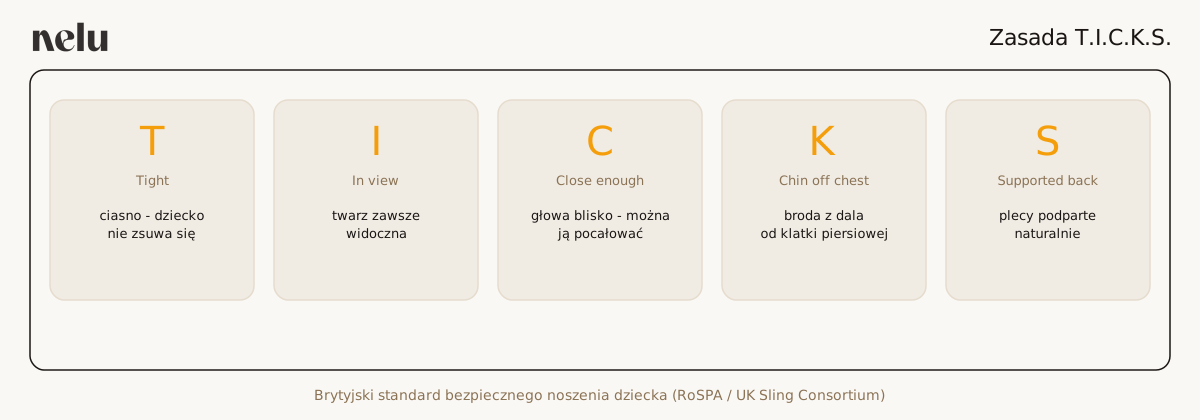
Safety organisations, such as the UK's RoSPA, warn that carrier fabric can cover a baby's nose and mouth in less than a minute or two if they are positioned too low in a curled C-position. That is why some countries have restricted the use of bag-style pouch carriers without clearly defined leg openings.
What isn't visible to the naked eye
Heavy metals and formaldehyde have no smell or colour - you cannot spot them simply by feeling the fabric. Yet they matter, because an infant's skin is thinner and more permeable than an adult's, and a baby's body is still learning to metabolise various substances. That is why, before choosing a specific model, it is worth asking the manufacturer if they have independent test reports confirming no migration of heavy metals like lead, cadmium, or mercury, and low formaldehyde levels in the fabric - not just in the main material, but also in the buckles, webbing, and faux-leather elements.
Another good sign is compliance with the European technical report CEN/TR 16512:2015, which comprehensively covers baby carrier safety - from chemical hazards and choking risks to structural strength.
Fire safety no one wants to think about - but should
This is a topic rarely discussed when choosing a baby carrier, which is a shame. Fabric in direct contact with your baby should be tested for flammability - checking that it does not spread flames too quickly and has no tendency for sudden surface flash. It might sound like a remote possibility, but in everyday life around the stove, barbecue, or holiday candles, it is a detail that genuinely matters.
Fabric that stays in contact with baby's skin all day long
Consider how many hours a day carrier fabric touches your baby's skin. This is not like an outdoor coat you take off once you are home - babies often fall asleep in carriers, sweat during summer, and rub their cheeks against the fabric. Natural fibres such as cotton and linen excel at wicking away moisture and heat, which is essential for an infant's thermoregulation while their body temperature control is still developing. Linen also stands out for its ability to adapt to ambient temperatures and its natural properties that limit bacterial growth on the fabric surface.
A carrier that grows with your baby
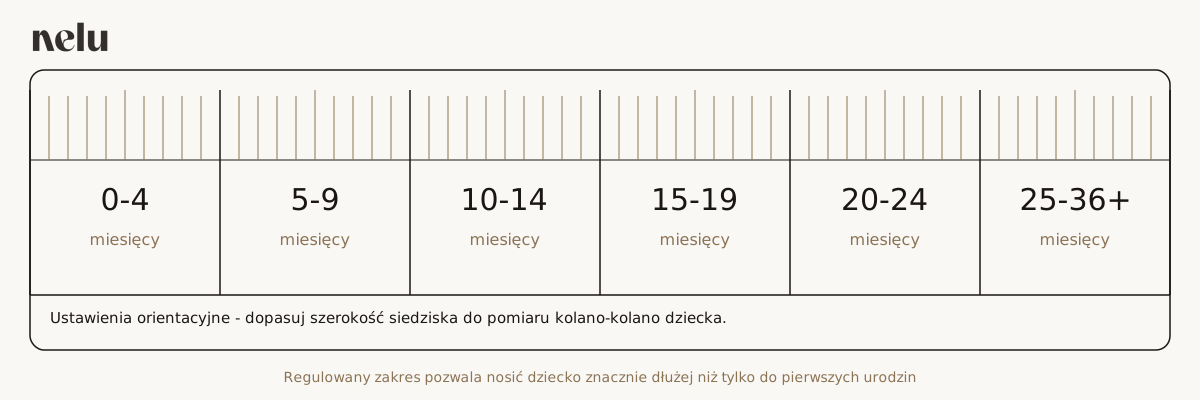
A three-month-old and a one-year-old have completely different weights, posture, and needs. A good carrier should adapt effortlessly - with adjustable straps, seat width, and back panel height. That way, you avoid finding yourself needing to buy another model just a few months down the road.
A quick checklist to wrap up
Before you click "buy now" or reach for your wallet in store, check whether the carrier:
- supports the baby's thighs from knee crease to knee crease,
- allows the back to maintain its natural, gentle curve,
- can be adjusted according to the T.I.C.K.S. guidelines,
- has independent testing for heavy metal migration and formaldehyde content,
- is tested for flammability,
- is made from natural, breathable fabrics,
- has an adjustable weight range that allows it to serve you for a long time.
Model Nelu Close (available in 100% cotton and 90% cotton / 10% linen) was created specifically to meet all of these criteria. Explore the design and test results
Bibliography and sources
- International Hip Dysplasia Institute - Baby Wearing. hipdysplasia.org
- International Hip Dysplasia Institute - Baby Carriers & Other Equipment. hipdysplasia.org
- International Hip Dysplasia Institute - Research & Clinical Trials. hipdysplasia.org
- Mannen E. et al. (2023), Babywearing Research Confirms Hip Healthy Position in Wide-Base Carriers, Journal of Orthopaedic Research. onlinelibrary.wiley.com
- RoSPA - Baby sling safety advice, T.I.C.K.S. rule rospa.com
- UK Sling Consortium - The T.I.C.K.S. Rule for Safe Babywearing. babyslingsafety.co.uk
- ScienceDirect, Multifunctional linen cellulose fabric coating: Combined heat storage and thermoregulation. sciencedirect.com
- SGS-CSTC Standards Technical Services Co., Ltd. Guangzhou Branch - Nelu Close carrier test reports, compliance with CEN/TR 16512:2015, EN 71-3:2019+A2:2024, EN 71-2:2011+A1:2014, EN 1103, ISO 14184-1:2011.
This article is for informational purposes only and does not replace consultation with a pediatrician or pediatric orthopedic specialist in individual cases.